ocean-wise-icon

Bienvenue au Centre d’aide Ocean Wise

North Pacific right whale

Eubalaena japonica

Description

  • Rare species. Can sometimes be confused with humpback whales.

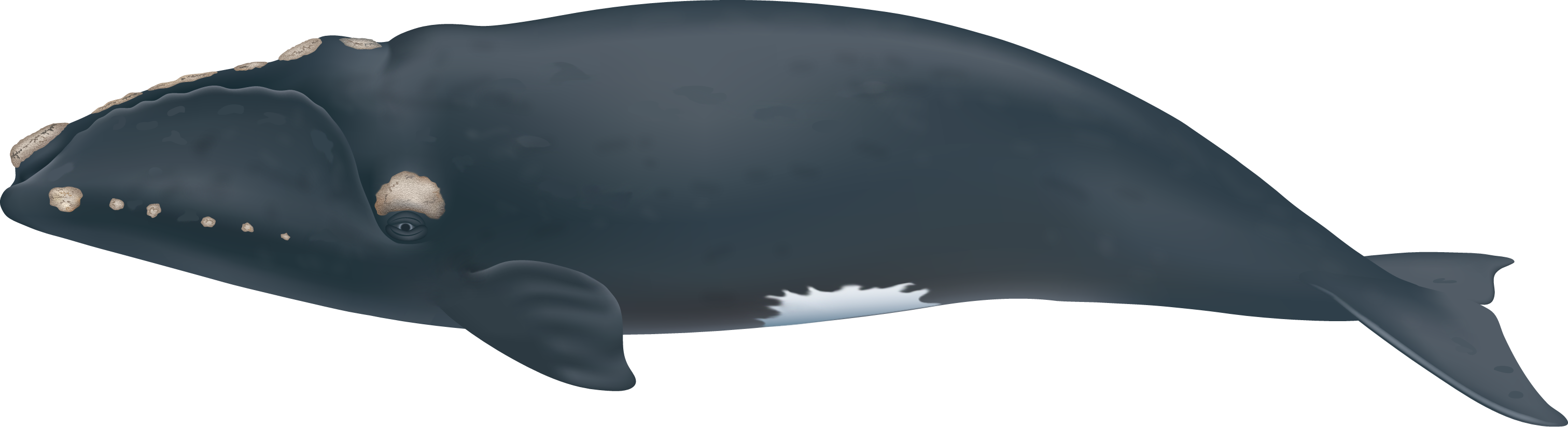
  • Maximum length of 17 metres.

  • Extremely stout body forms – their girth is as much as 60% of their length.

  • Mostly black with irregular white patches on the sides of their belly.
North Pacific right whale.png
  • No dorsal fin.

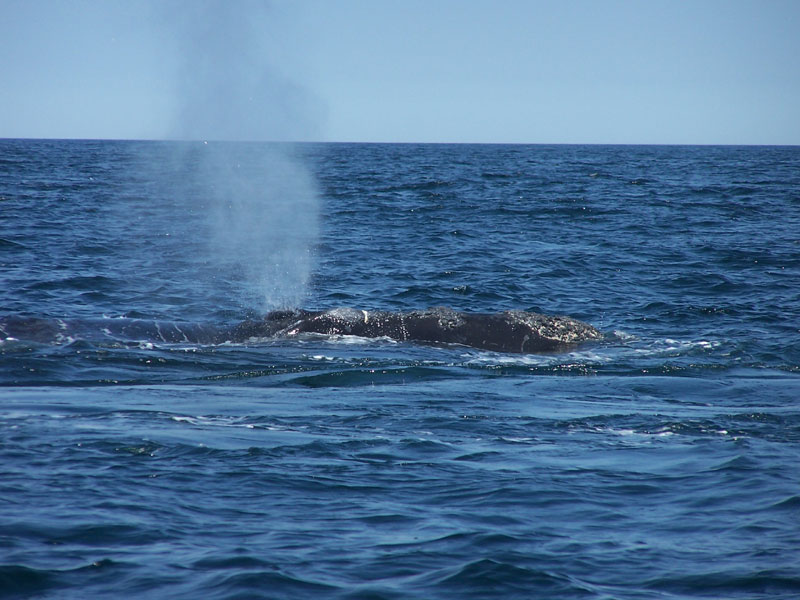
  • Distinct V-shaped blow, upwards of 5 metres in height.
right whale.jpg
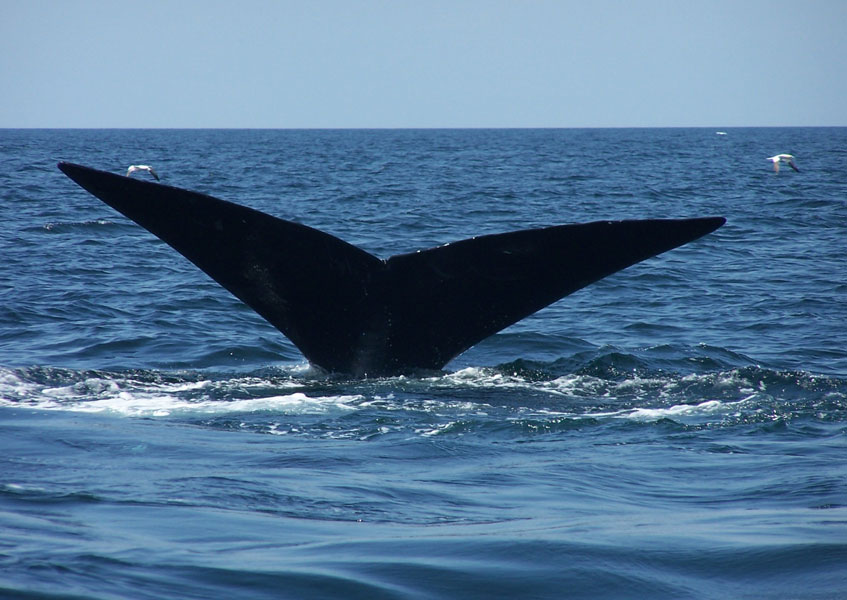
  • Broad and symmetrical tail fluke with a distinct notch.

  • Shows tail fluke upon diving.

right3_popup.jpg
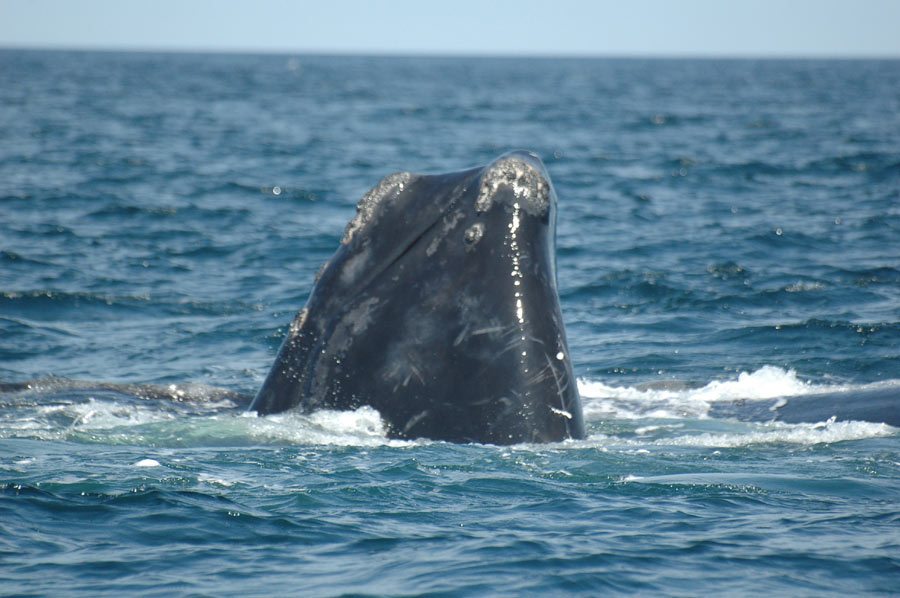
  • Head is often covered in white callosities – small, irregular knobs of calloused skin.

  • Callosities are usually covered in whale lice.
right4_popup.jpg

Comportement

  • Usually inconspicuous, although fluking, pectoral fin slapping and even breaching have been known to occur.

  • Typically solitary or in small groups.

Distribution

  • A confirmed right whale sighting had not occurred in B.C. waters since 1951 until one was photographed and observed by scientists with Fisheries and Oceans Canada in June 2013. Read about this sighting here.

  • It is believed that right whales spend summers in higher latitude waters feeding, and females go to warmer sub-tropical waters for winter calving. Little is known about the current distribution of north Pacific right whales because of their extremely low population size.

Remarques

  • At a distance, North Pacific right whales could be confused with humpback whales or grey whales: North Pacific right whales have a broad, smooth back whereas humpback whales have a stubby dorsal fin and grey whales have a series of "knuckles" running down their back.

  • The North Pacific right whale is designated as Endangered by the Committee on the Status of Endangered Wildlife in Canada (COSEWIC). COSEWIC’s assessment of the North Pacific population of right whales is as follows: Although there have not been sightings of this species in the last 50 years in Canadian waters, there have been sightings both south and north of British Columbia waters. Therefore, it is not appropriate to classify the species as extirpated. The total population in the eastern North Pacific likely numbers a few tens of animals.