ocean-wise-icon

Welcome to the Ocean Wise Help Centre

Sperm whale

Physeter macrocephalus

Description

  • Maximum length of 18 metres. Males are typically 30% to 50% longer (16-18 m, 52–59 ft) than females (12-14 m, 39–46 ft) and are twice as massive (50 000 kg vs. 25 000 kg).

  • Dark brownish gray, with skin that looks wrinkled, like a prune.

  • The huge square shaped head is distinctive, is sometimes referred to a ‘boxcar’
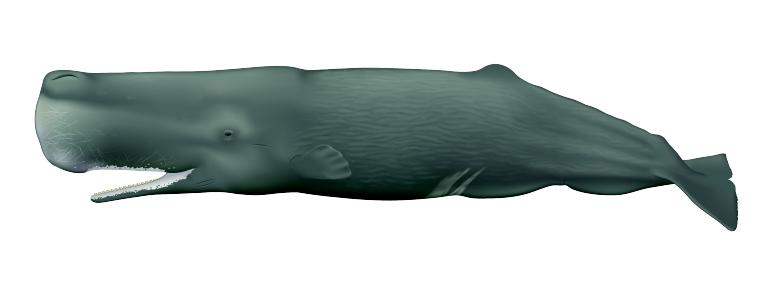
Physetmacrocephalusmale (1).png

  • Dorsal fin is a rounded hump, it sits 2/3 back from the head.

SpermWhale_image1.JPG
  • Low bushy blow, projected forward and to the left, usually less than 2 metres in height, very distinct
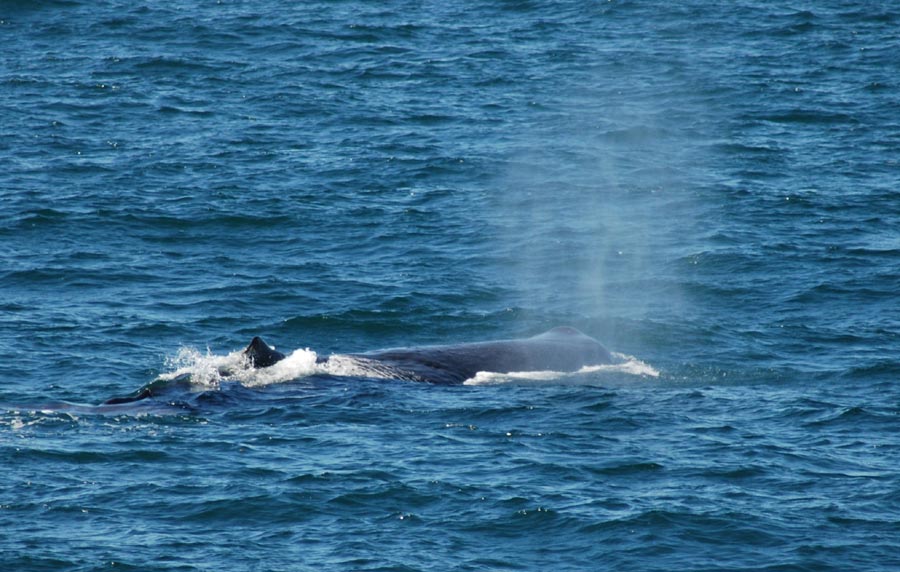
spermwhaleblow_popup.jpg
  • Each half of the tail is the shape of a right triangle, with a distinctive V notch in the middle.

SpermWhale_image2.JPG

Behaviour

  • Sperm whales dive to depths of up to 1 km to locate squid; although, most dives are to ~400 metres and last for 35 min to 1 hour.

  • After a long dive, sperm whales remain at the surface for around 8 minutes.

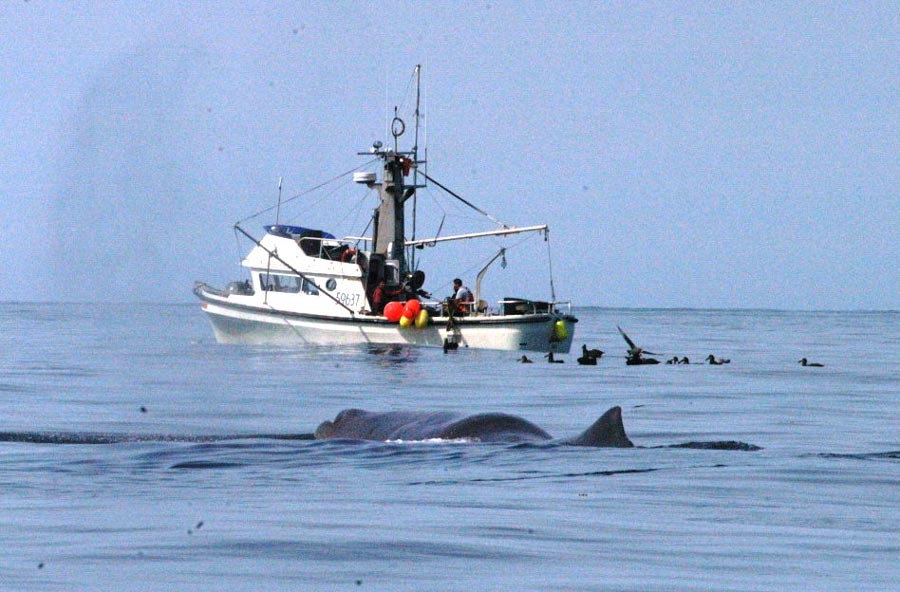
  • Sperm whales have been known to take fish off of fishing lines, a behaviour known as depredation.

spermdepredation_popup.jpg

Distribution

  • Sperm whales range widely through the world’s oceans and males are found mainly in offshore waters. They are now seen rarely in coastal B.C. waters.

Notes

  • Sperm whales are the largest of the toothed whales.

  • Their distinctive shape comes from their very large head, particularly in males, which is typically one-third of the animal’s length. The species name macrocephalus is from the Greek for “big head”. The common-name, sperm whale, refers to the waxy oil known as spermaceti, which is found in this species’ head, Spermaceti is a high-quality oil and was used originally in lamp oil and later as an industrial lubricant, in cosmetics, automatic transmissions and pharmaceutical compounds; making this species highly valuable to whalers.

  • Designated Not at Risk (1996) by COSEWIC. Reason for designation: Sperm whales range widely through the world’s oceans and males are found off both coasts of Canada. The worldwide population is reasonably large despite historical large reductions by commercial whaling. Whaling for this species was discontinued in 1972 in Canada, and 1968 in BC.